
Agostino Steffani (Castelfranco Veneto July 25, 1654 - Frankfurt am Main, February 12, 1728)
Text (unpublished) of a lecture by Prof. Gerhard Croll (Castelfranco Veneto, 1978), given at a concert in the cathedral, with music by A. Steffani
(See Library "G. Croll" of the Conservatory of Music "A. Steffani" in Castelfranco Veneto, Croll Bequest, typescript material; see also ; G. Croll, Agostino Steffani, Musiker, Politiker und Kirchenfürst, edited by W. A. Kautz-Lach,, Wien, Hollitzer, 2018)
Agostino Steffani (1654-1728)
It is not easy to speak as a foreigner in memory of a great master, right in his homeland. And this is especially difficult when it comes to Italy and a composer like Agostino Steffani, who just recently has become very well known in his birthplace, Castelfranco Veneto. There is even an "Agostino Steffani" street here in Castelfranco, and the Conservatory of this place is named after Steffani, which means much more than just a respectful remembrance. Many inhabitants of this city saw and heard in the years 1975 and 1976 Steffani's tragedy for music Tassilone, and participated in the unexpectedly great success of this music, which has been silent for more than 250 years. In the year 1977 the opera Niobe was performed, also the first staging since Steffani's time. Who can ever forget those impressions? The duet "Già brama il mio cuore - morire, morire!", Tassilone's farewell to Gismonda and worldly life ("Deh, non far colle tue lagrime"), or the death songs of Anfione and Niobe ("Spira già nel proprio sangue")... And several listeners of Steffani's performance of the Stabat mater dolorosa will remember the concert in the cathedral performed 15 years ago under the baton of maestro Antonio Sartori [in 1963].
But this living tradition that still binds you here in Castelfranco with Agostino Steffani makes it easy for me to talk to you about him. He was and still is among you today.
And I can say of myself that Steffani has also been of great importance in my life. Suffice it to mention that my edition of the Tassilone score was published 20 years ago. I too owe a lot to "St. Augustine in Music," basically like you: first and foremost a wealth of the most magnificent music.
When Agostino Steffani, Bishop of Spiga and Vicar Apostolic of the northern parts [of Germany] died on Feb. 12, 1728 in Frankfurt (he was on his way to Italy), the musical world did not notice.
This was not only because Steffani had composed almost nothing new for about twenty years. Even as a musician he had not been heard from again. He himself had even arranged to have his name disappeared-that is, to have it replaced by the pseudonym "Gregorio Piva"-from the still-circulating compositions of maestro di cappella Agostino Steffani. But he was well known, both in Düsseldorf as well as in Hanover and London, who was hidden behind the pseudonym "Gregorio Piva": a true "St. Augustine of music," the house prelate and assistant to the throne of the Holy Father, the Vicar Apostolic "ad partes septentrionales et per Saxoniam," the Bishop of Spiga "in partibus infedelium," Agostino Steffani.
No doubt it was pleasing to the bishop of Spiga to see composer and musician Agostino Steffani hidden under the pseudonym "Gregorio Piva," which was the name of his secretary and copyist. It was not that he no longer esteemed his own compositions. Quite the contrary: the bishop was proud of them, especially he was proud of his chamber duets, called by him "delicta juventutis." But he also highly appreciated the motet Qui diligit Mariam and the 5-voice madrigal Throw the Kings from the Throne. And he was flattered when Bononcini wanted to have the Tassilone performed in London in order to outdo with this masterpiece none other than G. F. Händel, that is, to drive him out of the London Opera House.
Then, in the 1720/21 season, Bononcini began arranging Steffani's Tassilone-an opera, however, composed fifteen years earlier-to contrast it, along with his own opera Astarto, with Händel's Radamisto. In the end, however, this plan was not realized. There was reportedly a lack of suitable singers in London, among other things - "three characters had to be lifted, which could not be done without spoiling the opera" - so it was written from London to Steffani.
But Church prince and politician Agostino Steffani believed that it was better to make the musician Steffani forgotten. Above all he believed he owed it to his reputation, to society. And in fact society reacted in part with mischievous comments to the career of the "singer, organist, deputy chapel master" and finally "opera chapel master" of the Electoral Prince. When Steffani in 1707 in Bamberg was ordained a bishop by the Prince-Elector of Mainz and when, two years later, he returned from Rome as Vicar Apostolic, there was open talk of a "metamorphosis of a comedian into a bishop."
And the youngest son of the Elector Prince of Hanover, Steffani's former master, paints the Bishop of Spiga's debut in Hanover, where Steffani had been employed as chapel master 20 years earlier, as follows:
The Bishop of Spiga came to our court in Annover. Instead of a wig, he now wears black, somewhat graying hair cut short. He also has a large cross with flashing diamonds on his chest and a ring with a large sapphire on his finger. All this suits him well, and one could forget the orchestra (i.e., the "chapel master" of yesteryear). But then the theater came back to me anyway, because of the bishop's demeanor and the way he spoke. That is, when the Prince-Elector greatly exalted the Baron of Sickingen, the Bishop of Spiga said, "I am glad that he is pleasing to you, since he is my creature [...]"
Obviously that remark of Steffani's was not made without a certain vanity and with the related gestures and mimicry, which the observer did not think was appropriate for a high ecclesiastical dignitary. In any case, according to this description of appearance and demeanor, we can well imagine the personality of Augustine Steffani as Bishop of Spiga and Vicar Apostolic. But what would he have looked like in reality?
You are all familiar with the image depicting Agostino Steffani in his priestly vestments, bareheaded, with his miter and crosier in the background (Fig. 1).

(fig. 1: Lithograph by H. E. von Winther 1816, Bildarchiv und Grafiksammlung der Österreichischen Nationalbibliothek, Wien, cf. Croll 2018, 270)
This portrait depicts Steffani in the year 1707, on the occasion of his ordination as bishop or a little later. It corresponds, at least the hairstyle, with the description quoted above ("the short grizzled black hair"). But one should be cautious, because this portrait is not an original painting, but a lithograph from the year 1816. We do not know where the painting that was the supposed model for the engraving made a hundred years later is today. Does it still exist? Did it actually exist? Or did the artist create a more or less fantastic ideal portrait of the Bishop of Spiga? So far we do not know.
Unfortunately, we had only a few opportunities for comparison. A small-format profile portrait from an effigy with several heads has also disappeared today. From what can be seen on a reproduction, it is the profile of a well-identified personage [cf. Croll 2018, 271]: a clergyman, obviously wearing a wig, striking the large nose, a prominent chin-we can see some resemblance to the portrait "in the ornamentation[in the clothes]" as a bishop, but nothing else.
Finally, there is a small drawn medal, which can barely be passed off as a portrait [cf. Croll 2018, 272]. It comes from a commemorative publication for the Elector Prince of the Palatinate, John Wilhelm, from the year 1708. No doubt "Augustine Abbot Stephani" (so begins the "legend") must be represented here. But compared with the other two images, here the bishop would be barely recognizable. And in fact the other medals in the publication, representing other characters, also show rather a family resemblance than characteristic well-defined characters among them.
Then, in a publication that came out only in 1978, we learn of the existence of an oil painting that evidently gives a living picture of Agostino Steffani (fig. 2).
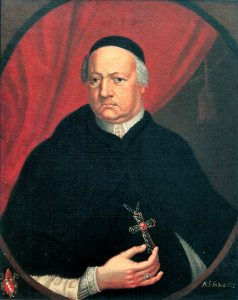
(fig. 2: Oil painting by G. Kappers 1714, Bertha Jordaan-van Heek Stiftung, Haus Welbergen, Ochtrup)
Painted in the year 1714, the picture shows a cleric, a bishop, at the age of 61: "Aetatis suae 61" is written in the lower right corner. Below left a coat of arms stands out (in a red oval shield there are five white lozenges in oblique rows, above a mitre). Behind the coat of arms two crossed pastorals can be seen. We know the painter's name from a label at the bottom of the frame: G(erhard) Kappers, and also the year in which the picture was painted: 1714.
The painter, Gerhard Kappers, came from Münsterland in Westphalia (presumably from Bocholt). In the year 1709 he was admitted to the guild of painters in Münster, and made a certain name for himself as a portrait painter in Westphalia. In a monograph of the Kappers family of painters, a certain skill in painting the clothing and various fabrics on the portraits of Gerhard Kappers (and his son Matthias) is praised first of all. An honest portrait painter then, bound by tradition.
According to the discoverer of the painting-Dr. Wilhelm Kohl, director of the State Archives in Münster/Vestphalia-it cannot be doubted that the person depicted is Agostino Steffani, bishop of Spiga:
- The portrait, painted in 1714 in Münsterland, depicts a bishop. Since it is not Prince-Bishop Franz Arnold of Wolff-Metternich zur Gracht, then reigning (1707/18, Prince-Bishop of Münster), only a suffragan bishop can come into question. And this was since 1714 (note well!) none other than Augustine Steffani.
- In fact in the year 1714, when the portrait was painted, Agostino Steffani was in the 61st year of his life ("Aetatis suae 61"). He had celebrated his 60th birthday on July 25, 1714.
Here, since this is an original painting, portrayed from nature-the only one we know of so far-we really see Agostino Steffani!
The other portrait, the engraving by H. E. von Winther of the year 1816, hitherto believed by all to be authentic, now appears in a new guise. It will have to be regarded at least as highly idealized. And, about this portrait, another note I owe to an art historian friend: the shape of the beard on Winther's engraving does not correspond to the fashion of the early eighteenth century. It rather corresponds to the period around the year 1630 (e.g., Wallenstein, Kaiser Ferdinand). And another aspect: is it improbable that such a critical and careful observer as the young Elector Prince of Hanover never mentioned the bishop's beard, which was totally unusual in his time?!
So we will have to get used to recognizing the "new" portrait as an authentic image of Agostino Steffani's features . Of course, as a painting it is nothing extraordinary, not an excellently painted portrait. The painter was a good craftsman, but he certainly was not an excellent portrait painter, gifted with subtle intuition.
But, before this picture, let us try to imagine Steffani, as he was in the year 1714.
From the end of 1709 Steffani was in Hanover as Vicar Apostolic of the Northern Missions. He had great goals and ambitious plans, but there were many difficulties and there were also some failures. The minute work of the missions was tiring, there were quarrels with the Jesuits in Hanover and discord with the neighboring bishop of Hildesheim. With fervor Steffani promoted the construction of a Catholic church in Hanover, which was decided in the electoral treaty of 1693, but the work was not progressing well. Steffani's hopes of being able to engage Johann Dienzenhofer [1663-1726], the court architect of Prince-Elector Lothar Franz von Schönborn, for the construction of the church went up in smoke.
Everywhere there was a lack of money. There were painful, difficult and worry-filled years. And it seems to me that we find a lot of traces of all this in the face of the 60-year-old bishop. Troubled, almost resigned features stand out.
But we also evidently notice the strength of an important character. The bearing of the head shows pride and self-consciousness: the mouth, the eyes with slightly converging pupils, and the slightly frowning eyelashes give an idea of temperament and energy. The shape of the right hand with its somewhat long but subtly shaped fingers is striking. Remember Steffani's fame as an organist and first and foremost as a harpsichordist.
Also depicted on the portrait is the bishop of Spiga. A man who knew how to live as a baroque church prince, and who not only loved the fine arts but was also "a friend of good food," just like his friend, the prince-bishop of Münster. Certainly it is no pure coincidence that we find not infrequently luculent topics in Steffani's correspondence! In his documents we find many receipts for supplies of wine, received as gifts from the blessed estates of the Elector Prince of Mainz or the Bishop of Würzburg. And there is even a real recipe for truffles in the form of a poem, of course, written by the author of the Tassilone booklet, Stefano Benedetto Pallavicini [Pallavicino].
I realize the danger of being thought presumptuous by allowing myself to make some notes on the problem of Steffani's name, that is, the pronunciation of his surname.
So in the first place I would like to ask for your "indulgence." But perhaps the year of commemoration would be the right occasion, and that gives me some courage.
One generally hears the surname pronounced with the accent on the second syllable: "Steffàni." My cautious information here and elsewhere seemed to affirm this: it is natural to accentuate the second syllable, not the first at all, especially since the name is often spelled with an "f" only, and is found in this spelling in the very Veneto of the seventeenth and eighteenth centuries.
In contrast, it was argued as early as 70 years ago by Alfred Einstein, the first truly reliable biographer of Steffani in recent times, that the emphasis on the first syllable is correct: "Agostino Stèffani." I have not found a reason for this in Einstein, though. But he gives us in another place a decisive argument why according to the rules of linguistics the first syllable should be accented. In fact Einstein argues that the surname in "spoiled dialect [dialect form]" was written as follows: "Stievani." That is, with a diphthong in the first syllable, which demands in every respect the accentuation on the first syllable, thus the pronunciation "Stièvani." And for that - with the doubling of the "f" - we have "Stèffani"!
This is the information given to me by an expert at the Institute of Romanistics in Salzburg, and before you protest or attack me, I would like to gladly give you the address of the professors at the University of Salzburg who informed me...
Stabat mater
The sequence Stabat mater dolorosa is found in the nineteenth chapter of John's gospel: the sorrowful mother under the cross of Christ. Her appearance arouses our compassion. We would like to feel her pain with her. And men ask Christ's mother for her assistance and protection on the day of universal judgment. When we have to die, we hope to obtain heavenly happiness through the death of Christ: "Quando corpus morietur, fac, ut animae donetur Paradisi gloria."
The composition of this prayer is attributed not only to St. Bonaventure but also to Jacopone da Todi († 1306). Undoubtedly the poem comes from the circle of the order of St. Francis. The earliest melodies related to this prayer were hymns. Sequence melodies are found more frequently only from the 15th century onward. Also from this century are the first multi-voice compositions of the Stabat mater, the most famous being the 5-voice motet by Josquin des Prez, composed about 1500. It is true that Josquin set the text Stabat mater dolorosa to music, but he used a secular French song as cantus firmus . The boundaries between the "profane" and the "sacred" seem to have been abolished. Josquin's Stabat mater was well known and appreciated, especially in Italy. The motet was widespread in manuscripts and prints, was sung very often and was even "imitated": an Italian monk and composer quoted Josquin's composition at the beginning of a 4-voice lauda.
Today we are familiar with the compositions of Pergolesi's Stabat mater (ca. 1730), the 19th-century compositions of Rossini and Dvorak, and in our time Penderecki.
Steffani's Stabat mater dolorosa is almost unknown to the general public. Yet it is a true masterpiece! With good reason it has been called "the culmination of Steffani's creations of sacred music."
A performance of this work demands a lot from the soloists, chorus and orchestra, and partly because of this the work has fallen into oblivion. With respect to this, I immediately follow up with some notes.
The older [oldest] copies are found almost exclusively in non-Catholic countries (the fact that there are precisely two "good" copies of the score in London, is certainly due to Steffani himself). It is true that there are modern piano reductions and, respectively, scores for choir, but there is no complete [definitive] edition of the score. Our performance is based first of all on a manuscript score, which was copied forty years ago from an older score. The copy was made by my revered teacher Prof. Dr. J. Neyses, director of the Conservatory in Düsseldorf. Now this score by Prof. Neyses was collated once again by me with the score in my opinion most reliable from the first half of the nineteenth century.
Steffani composed his Stabat mater probably at an advanced age [and in Düsseldorf]. Unfortunately, the autograph has disappeared. Perhaps it was in his bequest, which I am still looking for (and I ask you for help with it!).
Some notes on this.
That musical bequest was part of the subject matter of the trial that took place in Rome for months and months between the apostolic chamber and Steffani's heirs. According to the judgment of January 12, 1733, two chests with letters and files were awarded to the Congregation of the Propaganda Fide, where they are still found today, sorted and bound in about eighty volumes. The remaining money and a third crate with music were obtained by the heirs. But the traces of this third chest were lost soon after the trial, and unfortunately we no longer know where that musical bequest, which would certainly be so valuable to us, ended up. However, we have not given up all hope of finding it one day.
I have already mentioned the special requirements demanded by the performance of the Stabat mater. A 6-voice choir (with two sopranos and two tenors), six soloists, in the orchestra 5-voice [5-part] strings (violas da braccio and da gamba, or two violins and three violas), as well as basso continuo and organ. The solo singers have to overcome many difficulties, it takes in addition to great virtuosity, a performance full of "affect." The bass must go down to D grave, from the death of Christ even to C grave. Above all, the interpretation demands from all musicians a certain inner attitude, devotion and affection, simplicity and fervor, the same involvement that the Composer felt: compassion for the mother of God under the cross, pity.
Qui diligit Mariam
Agostino Steffani's second composition performed this year here in Castelfranco, is also a work of the composer's late age. But the motet Qui diliget Mariam should not have been composed later than G. F. Händel'sUtrechter Te Deum, as has been assumed. However, Händel certainly knew Steffani's motet before he composed his oratorio Salomo; the duet "Non pavescat lethales horrores" from Steffani's motet appears as Solomon's "solo" (with following chorus) "Music spread thy voice around."
Allow me a note here about the relationship between Steffani and Händel. Steffani, thirty years older than Händel, is usually presented in the literature as a paternal friend who paves the way for the young genius. And it depicts the two's journey from Rome to Venice, a journey whose destination was Hanover, where Steffani would personally introduce Händel and recommend him as his successor.
Of all this almost nothing is reliably documented. One should be more guarded. What is certain is that Steffani and Händel were not close friends. To the best of my knowledge, Händel's name does not appear in Steffani's letters, but in letters received by Steffani from friends in London, one finds rather mischievous remarks about Händel and his very recent works. For example, from letters from Modena's London resident to Steffani in Hanover, we learn the following:
[...] The Most Serene Royal Highnesses have proposed an opera called the Tassilone by Signor Piva. The Directors of the Academy wish to serve their Highnesses, and in order that the music may be regulated with love, and exactness they have begged Bononcino to direct it, not trusting the fracas of some other, and still doubting refusal. Bononcino replied that he will glory in serving the composition of Mr. Piva, whom he considers the St. Augustine of Music. It will be necessary to change a few little recitatives but the least alteration will not be made in the Arias. Bononcino who knows that I have the honor of being Your Excellency's Servant seeks me to procure for him that of the esteem of her thanks, and to present her with his respects [...].
"Not trusting the smash of some other, and still doubting rejection"-by which no one else but G. F. Händel is alluded to! Here it is: the directors of the Academy did not at all expect Händel to conduct Steffani's Tassilone "with love and exactitude," and therefore they were afraid of a fiasco that would have been appropriate to Händel himself.
But even we cannot expect such tolerance from Händel. At that time - in the winter of 1720/21 - his very reputation, his existence in England, was at stake. The parties - the Italian on one side, the followers of the "dear Saxon" on the other - had already formed. It was an "opera war," comparable to that between Gluck's followers and Piccinni's followers in Paris in the 1770s.
But aside from that: wasn't having special demands for the performance of Tassilone a great compliment to this work, which was already an old work for that audience (and also for the Academy directors), accustomed to hearing and seeing the absolute new?
But we should not hold the contrary to be right either and say that the two antagonists were mortal enemies. Steffani's compositions undoubtedly made a great impression on Händel. Steffani's music, based on a perfect mastery of counterpoint, was entirely Italian, but it also had elements of the new French instrumental music. It provided a model for Händel's music as well, which of course applies first and foremost to the chamber duets, but also to the Tassilone and-as you will have a chance to hear in the concert-to the motet Qui diligit Mariam, which Händel certainly met in London. For shortly before his death Steffani sent this motet to London, where it became the favorite piece of the "Assembly of Vocal Music," at which Händel also had access.
Fusion of Belcanto and counterpoint with beautiful musical form-this is how one could characterize Steffani's music in one sentence.
But one should not talk too much about music-it is better to listen to it or perform it oneself.
Thank you for their attention!
(Edited by Prof. Nicoletta Billio, scientific-didactic head of the "Gerhard Croll" Library of the "A. Steffani" Conservatory of Music in Castelfranco Veneto, March 2022)